Welland sits on flat, low-lying central-Niagara ground built around the canal. There is no shoreline wind driving rain sideways and no escarpment funnelling runoff downhill. The defining challenge here is drainage, and it changes what a good eavestrough job looks like.
On flat lots there is little natural grade to carry water away. Proper fall inside the trough and downspout extensions that discharge well clear of the foundation matter more in Welland than anywhere with a hill. This is the single most common thing we correct on replacement work.
Canal-corridor humidity accelerates corrosion on older galvanized and steel systems. Aluminum with corrosion-resistant hidden bracket hangers holds up far better in air that stays damp, and it avoids the fastener failures that show up on spike-and-ferrule systems here.
Standing water in a poorly sloped gutter freezes and expands through inland freeze-thaw cycling, which is how a trough that merely drained slowly ends up sagging or pulling loose. Fixing the fall is preventative work, not cosmetic.
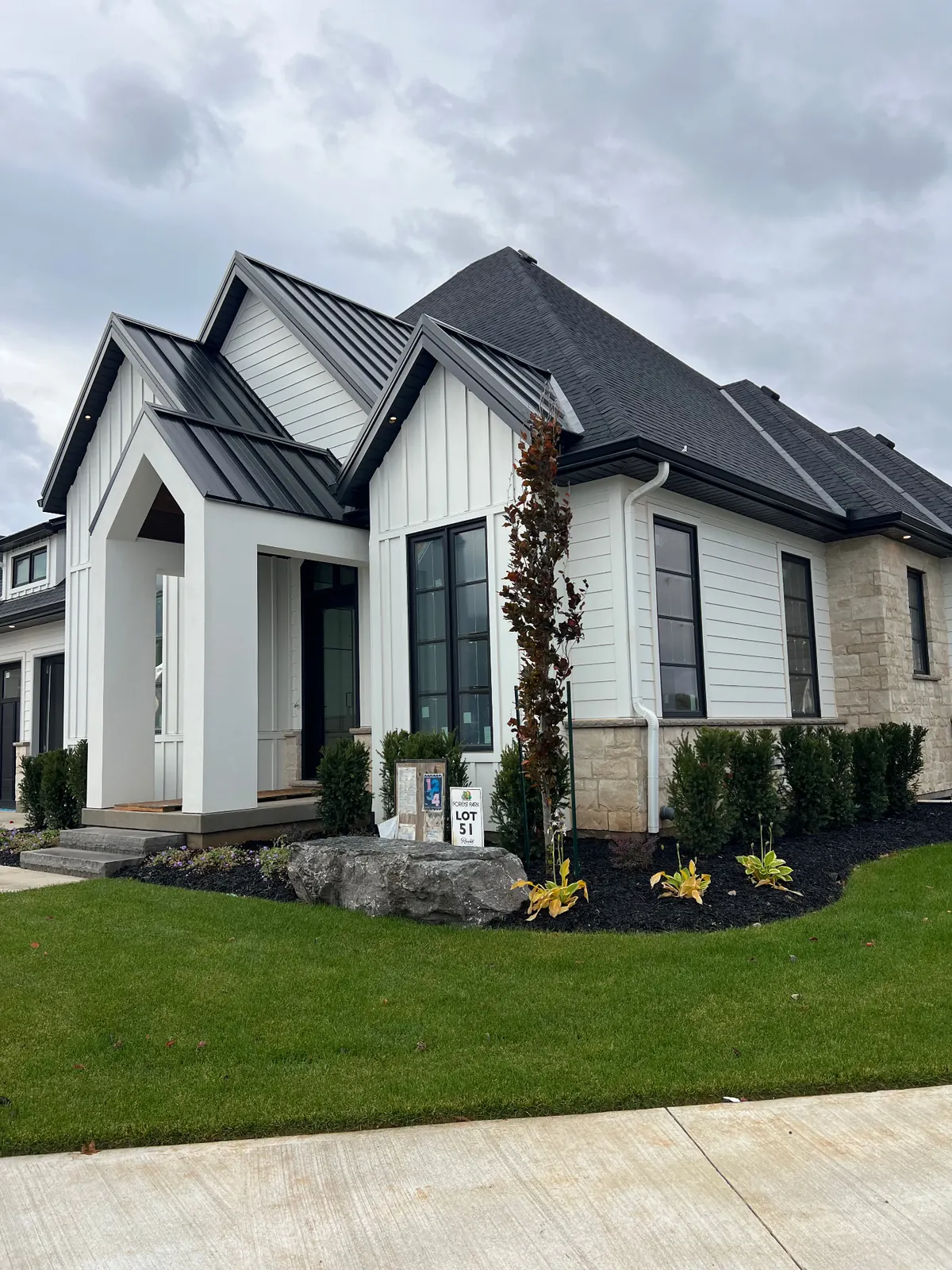
Larger newer north-end homes with complex rooflines benefit from 6-inch trough and extra downspouts, since builder-standard sizing often concentrates too much roof into one run.
The short recommendation for most Welland homes: get slope and downspout extension right first, use hidden bracket hangers for the humidity, specify 6-inch on larger or complex rooflines, add leaf guard on treed lots, and consider de-icing on sections that ice up every year. Full material detail is on our eavestrough, soffit and fascia service page.