Niagara-on-the-Lake sits where the Niagara River meets Lake Ontario, and it combines shoreline exposure with something no neighbouring community has in the same concentration: a large stock of heritage homes alongside wine-country estates. That mix, more than the weather alone, decides what a good roofline job looks like here.
On heritage Old Town homes the constraint is aesthetic as much as functional. Trough profile, colour and fascia detail need to suit the character of the house, which is precisely where forming aluminum on site earns its place over fitting stock lengths.
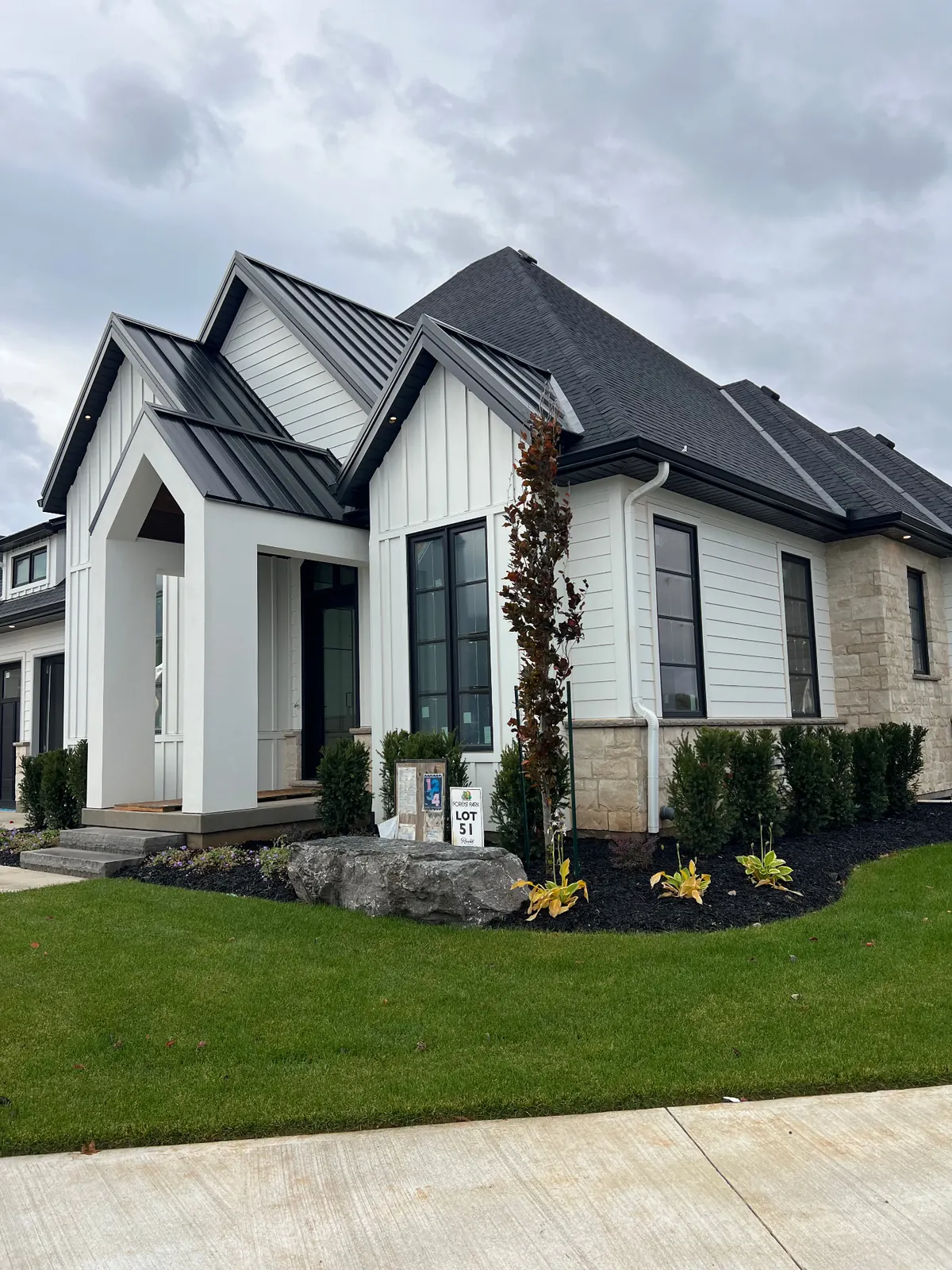
Larger estate and wine-country properties have more roof area and more planes. Six-inch with additional downspouts is the usual answer where builder-standard 5-inch overflows at valleys and inside corners.
Shoreline homes on the north side take wind and moisture off Lake Ontario. Secure hidden bracket hangers and properly sealed fascia capping matter more there than capacity, because the failures are mechanical and moisture-driven.
Old Town's mature canopy drops a heavy leaf load, so gutter protection is genuinely useful on those streets, and freeze-thaw with shaded north-facing eaves makes de-icing worth pricing on the coldest exposures.
The short recommendation for most Niagara-on-the-Lake homes: profile-matched custom-formed trough on heritage properties, 6-inch on larger estate rooflines, secure hangers and capping on shoreline exposures, leaf guard under the Old Town canopy, and de-icing on ice-prone north sides. Full material detail is on our eavestrough, soffit and fascia service page.