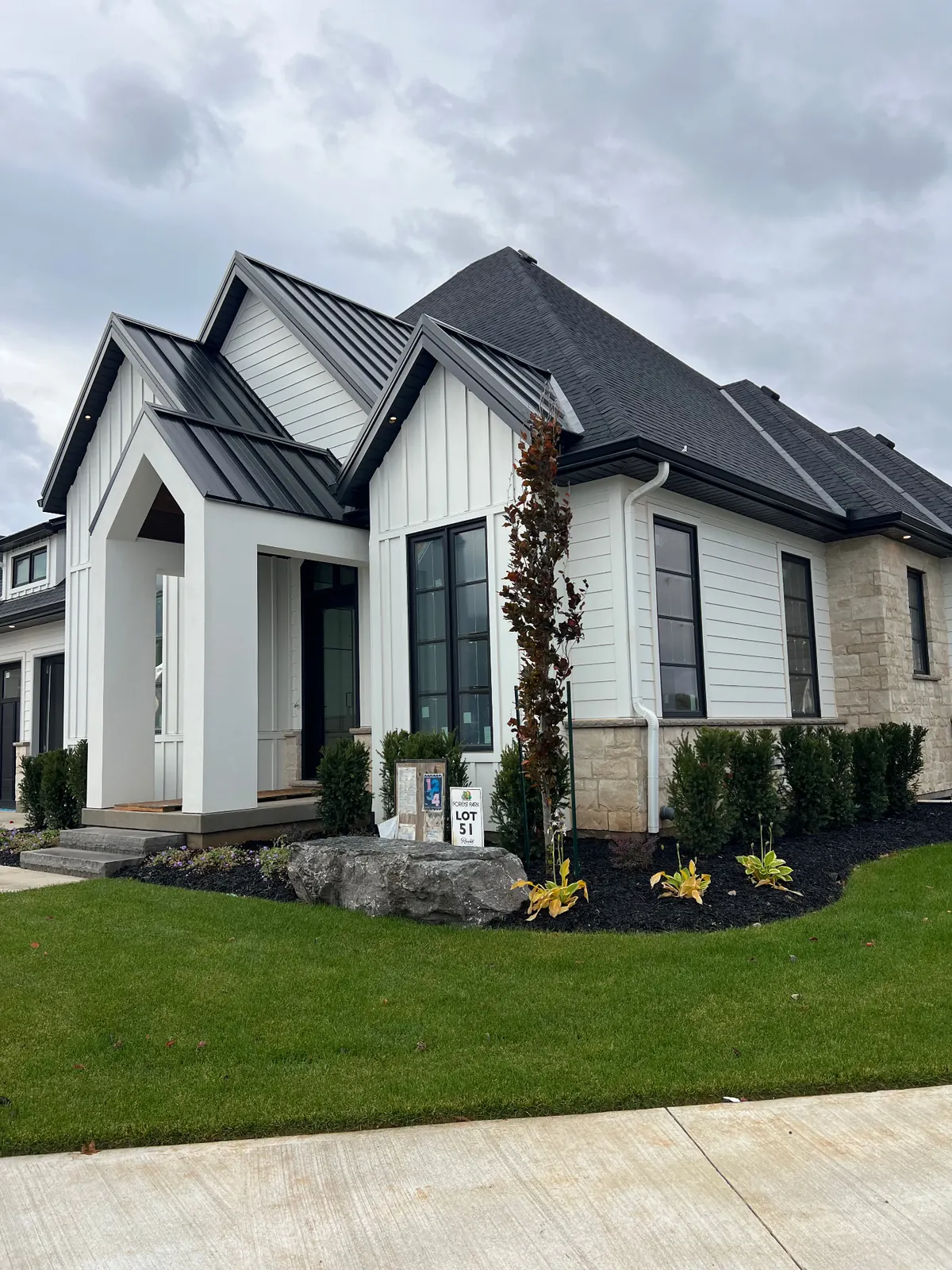
Grimsby is unusual in Niagara because it has two climates in one town. The land is a narrow band between Lake Ontario on the north and the Niagara Escarpment on the south, with the Bench in between. A roofline solution that suits a lakeside street is not automatically right for a property sitting at the base of the escarpment a couple of kilometres away.
On the lakeshore side, the load is wind-driven rain and persistent moisture off Lake Ontario. It arrives fast against north elevations, so 6-inch seamless aluminum with oversized outlets on exposed north sides is the usual recommendation, together with hidden bracket hangers that resist wind lift and do not puncture the fascia face the way spikes do. Shoreline tree lines add a steady leaf load, which is where gutter protection earns its place.
On the escarpment and Bench side, the problem is not wind but grade. Upslope ground concentrates water toward the house, so trough sizing alone does not solve it. We favour 6-inch with additional downspouts on the uphill elevation and deliberate discharge extensions that carry water across and away from the slope rather than releasing it where gravity will bring it straight back.
Escarpment shade is the winter factor. North eaves under the ridge stay colder for longer, so meltwater refreezes and the same sections ice up year after year. De-icing cable on those specific exposures is worth considering, alongside properly vented soffit so attic heat is not feeding the cycle.
The short recommendation for most Grimsby homes: 6-inch seamless aluminum on exposed lakeshore and uphill escarpment elevations, hidden bracket hangers throughout for wind and corrosion resistance, leaf guard on treed lots, and careful downspout extension on Bench grade. Full material detail is on our eavestrough, soffit and fascia service page.