Niagara Falls runs along the Niagara River and the gorge, and that geography creates a local microclimate. Homes near the river and the falls carry noticeably more humidity and mist-driven moisture than the north-end subdivisions a few kilometres inland. Layer the city's housing range on top of that and you get two variables in play at once: exposure and age.
In older established neighbourhoods such as Stamford and Chippawa, aging systems and mature tree canopy arrive together. Fascia condition and leaf load are the recurring themes, and the honest recommendation is often full soffit and fascia work alongside the eavestrough rather than hanging new aluminum on tired wood.
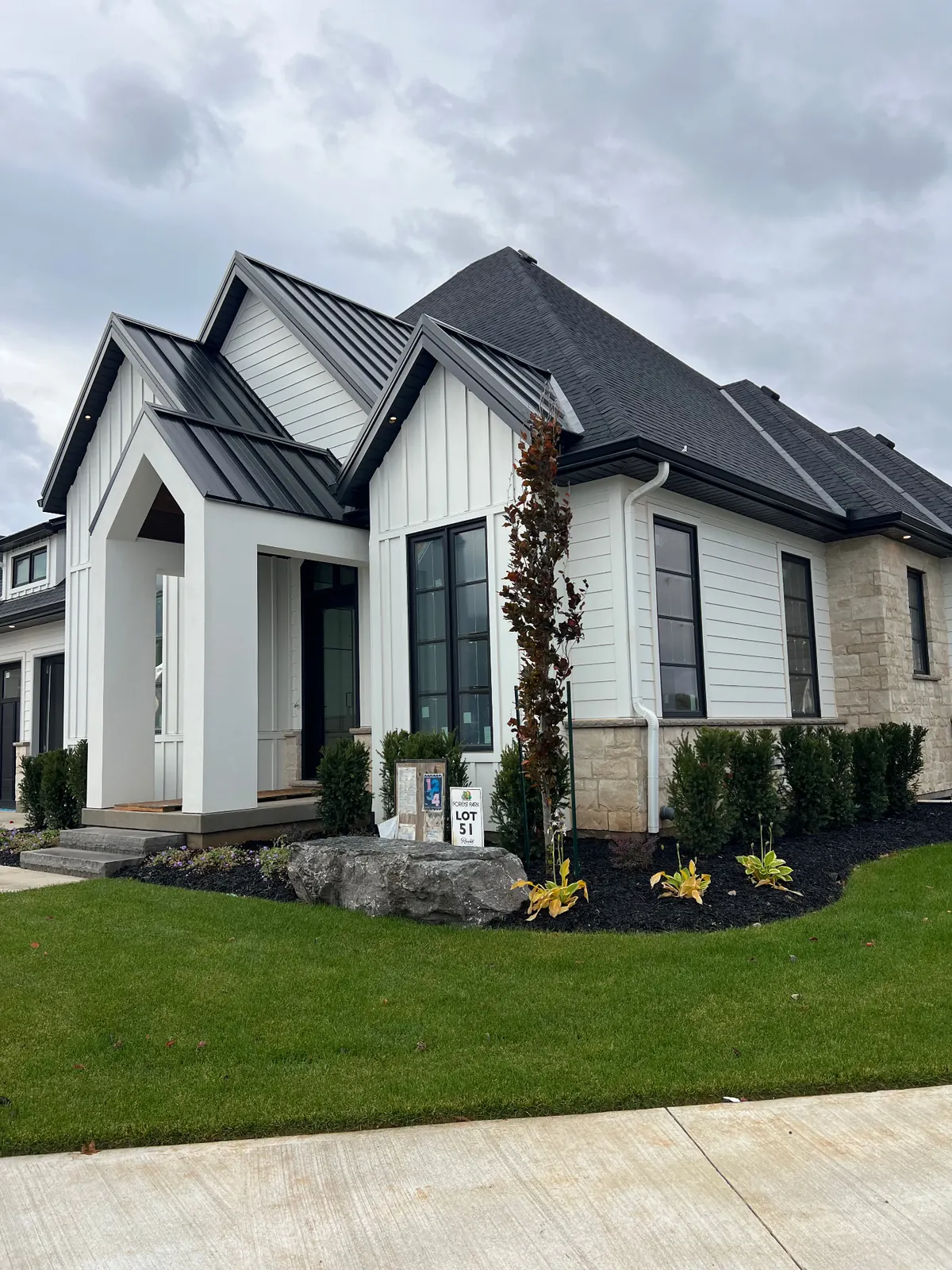
In the newer north-end and Montrose-area subdivisions, the housing is sound but the rooflines are bigger. Multiple planes feeding a single builder-standard run is the common fault, and 6-inch trough with additional downspouts is usually the fix rather than repeating the original spec.
On river-adjacent homes, persistent humidity is the quiet factor. It pushes toward corrosion-resistant hidden bracket hangers and properly sealed fascia capping, because moisture that never fully dries out is harder on fasteners and wood than an occasional heavy rain.
Freeze-thaw cycling is significant here, and north-facing planes hold ice long after south exposures clear, so de-icing cable is worth pricing on the coldest, shadiest sections.
The short recommendation for most Niagara Falls homes: assess fascia condition first on older properties, specify 6-inch on larger or complex newer rooflines, add leaf guard in mature-tree areas like Stamford and Chippawa, and consider de-icing on ice-prone north exposures. Full material detail is on our eavestrough, soffit and fascia service page.