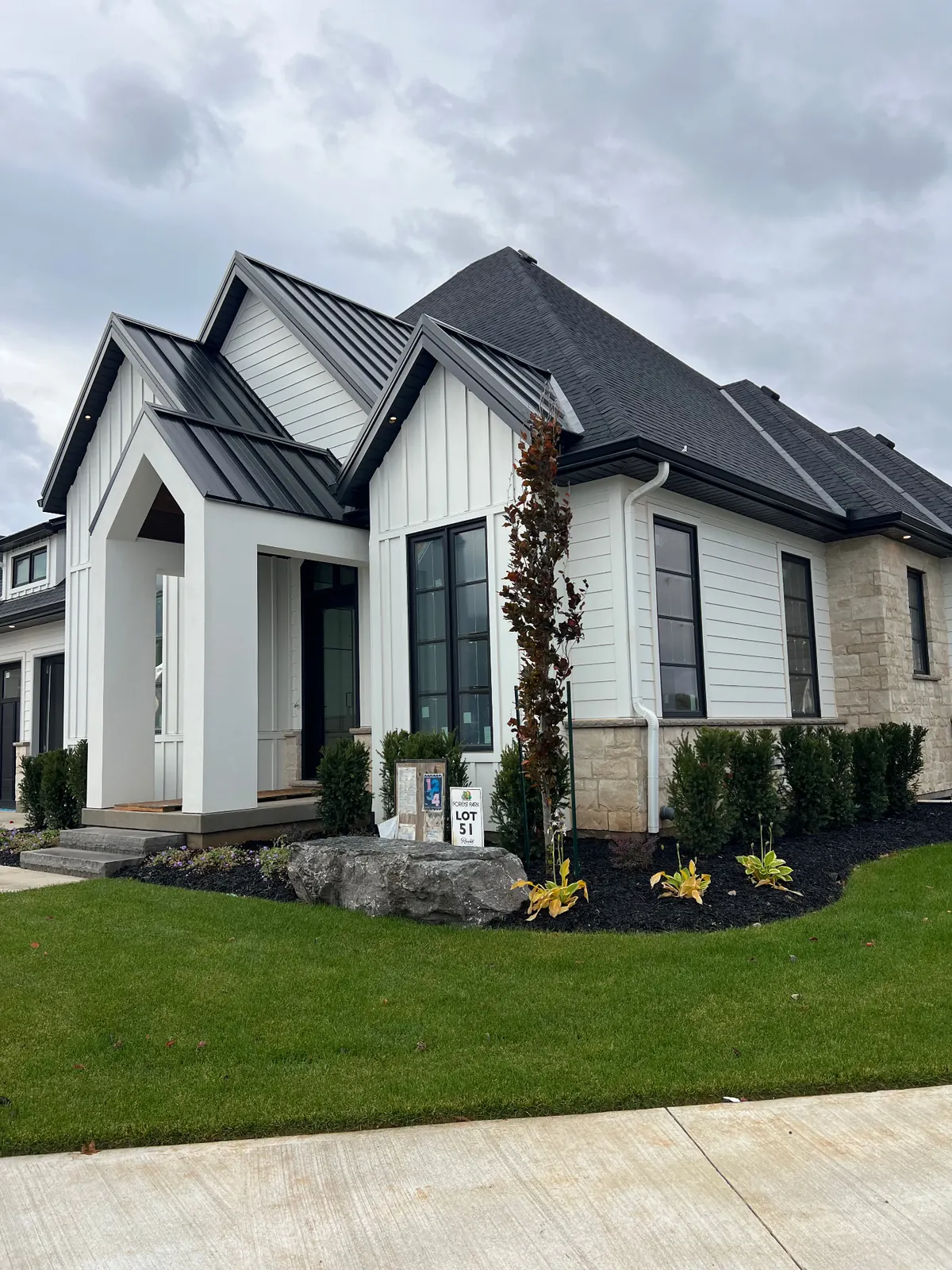
Stoney Creek runs from the Lake Ontario shoreline up onto the Hamilton Mountain edge, and it has grown quickly, so a large share of the housing is newer, bigger and more complex-roofed than the surrounding older communities. That growth, more than the shoreline itself, is what usually drives the specification here.
Newer upper-area subdivisions have steep multi-gable rooflines that concentrate runoff. Six-inch seamless with additional downspouts handles it where builder-standard 5-inch overflows at the valleys. This is the most common change we make on homes in Heritage Green, Valley Park, Paramount and Highland.
The lakeshore side sees Lake Ontario wind and moisture. On exposed elevations at Winona and Fifty Point, secure hidden bracket hangers and properly capped fascia matter more than trough size, because failure there is usually mechanical or moisture-driven rather than a capacity problem.
Escarpment-edge and Mountain-brow exposures see more wind and colder eave temperatures than streets closer to the lake, so ice returns to the same spots each winter and de-icing cable is worth pricing on those north-facing sections.
The short recommendation for most Stoney Creek homes: 6-inch with extra downspouts on large or complex newer rooflines, secure hidden bracket hangers and fascia capping on lakeshore exposures, leaf guard on treed older streets, and de-icing on ice-prone elevations. Full material detail is on our eavestrough, soffit and fascia service page.