Hamilton is split by the Niagara Escarpment: the Mountain above and the Lower City below. Conditions differ across the two, and the housing differs even more. The practical consequence is that the same specification can behave completely differently on two homes ten minutes apart. A century home in Durand and a new build in Waterdown are not the same problem with a different postal code.
In the Lower City, age is the driver. Older homes need the fascia condition assessed before anything is sized, and full soffit and fascia replacement alongside the eavestrough is often the honest recommendation rather than hanging new aluminum on tired wood. Tight lots then dictate downspout routing, because there is rarely room to discharge wherever would be ideal, so extensions and placement get planned deliberately.
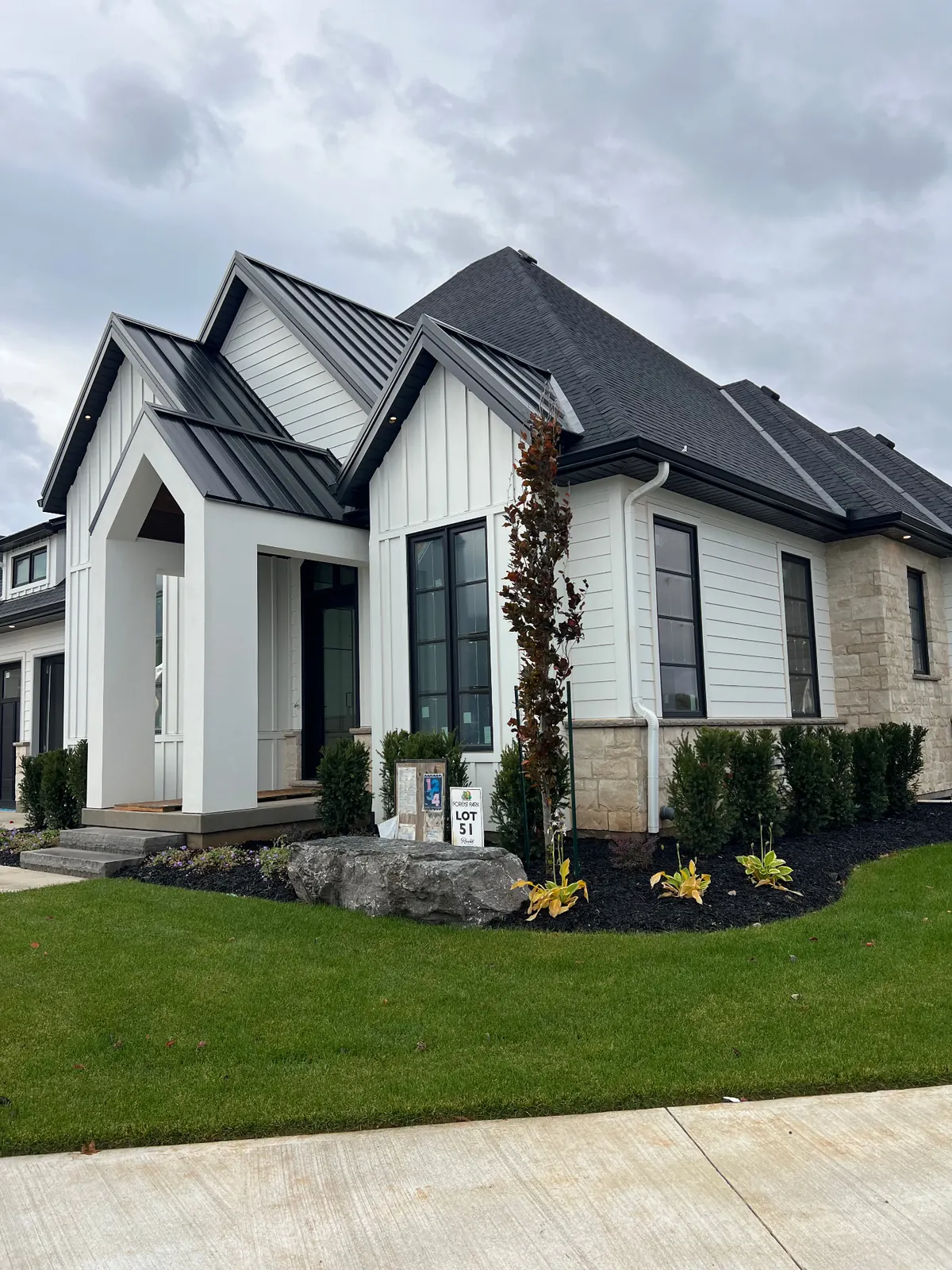
On the Mountain and in the suburbs, replacement is usually more straightforward. The complication there is scale: larger newer homes with steep pitches and multiple roof planes often need 6-inch trough with additional downspouts rather than matching the builder-standard 5-inch that came with the house.
Escarpment-edge and Mountain-brow exposures see more wind and more ice than sheltered streets below. Hidden bracket hangers hold better against wind lift than spike-and-ferrule, and de-icing cable is worth pricing where the same eave freezes every year.
The short recommendation for most Hamilton homes: assess fascia condition first on older Lower City properties, specify 6-inch on larger or complex suburban rooflines, add leaf guard on treed lots in Westdale, Dundas and Ancaster, and consider de-icing on ice-prone north and escarpment exposures. Full material detail is on our eavestrough, soffit and fascia service page.