Port Colborne sits on Lake Erie at the south end of the Welland Canal, and that location, not the material catalogue, decides what holds up here.
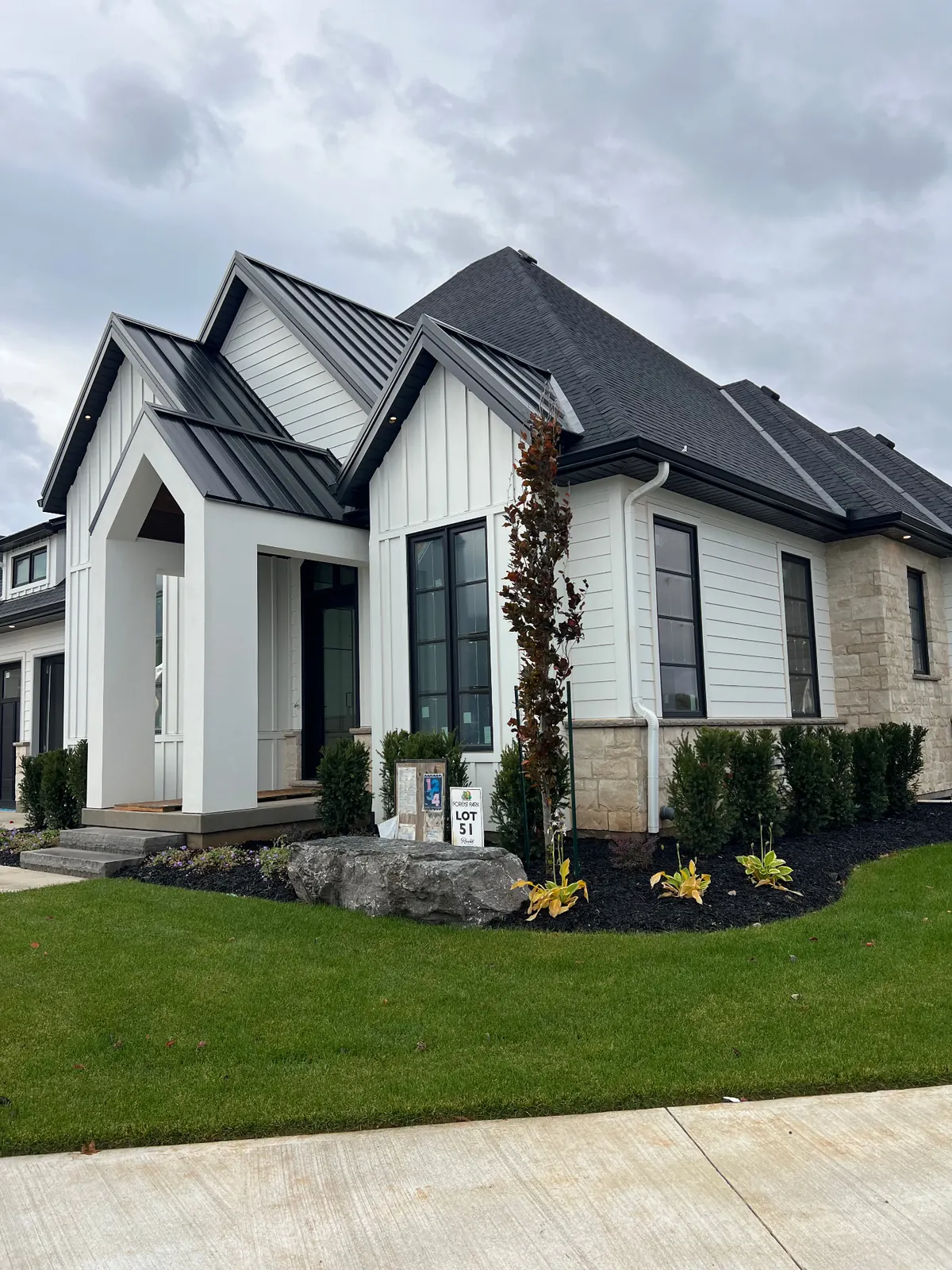
The dominant load is wind-driven rain arriving from the south and southwest straight off the lake. It hits one elevation hard and fast, which is why we recommend 6-inch seamless aluminum with oversized outlets on lake-facing and exposed sides and keep 5-inch for sheltered elevations with smaller roof areas. Undersized trough does not fail quietly; it sheets over the front edge during the worst of the storm.
The second factor is humidity along the canal corridor. Constant damp air accelerates corrosion on old galvanized and steel systems and on any fastener driven through the fascia face. Hidden bracket hangers in corrosion-resistant material avoid punching the fascia and outlast spike-and-ferrule by a wide margin in this air.
Lake-effect snow is the winter problem. Snow that accumulates and refreezes at a cold eave forms ice dams, so de-icing cable on north exposures is worth considering where the same spot ices up every year. Higher ambient humidity also raises the stakes on the attic side: properly sealed soffit with adequate venting and securely hemmed fascia capping matters more here than it does inland.
Finally, flat lakefront lots need deliberate downspout placement and extensions carrying discharge well away from the foundation, because there is no natural grade doing that work for you. Treed lots, particularly toward Wainfleet, benefit from leaf guard installed at the same time. Full material detail is on our eavestrough, soffit and fascia service page.