Pelham is inland and high. Fonthill sits on the Fonthill Kame, the highest ground on the Niagara peninsula, with no lake frontage anywhere in the town. That changes the problem completely compared with the lakeshore cities: the load here is wind, elevation, trees and freeze-thaw rather than salt-humid lake air.
Tree canopy is the defining factor. Established lots through Fonthill, Ridgeville and older Fenwick drop enough leaf and seed load each fall to choke a bare trough within a season. On treed properties leaf guard is close to essential, not a luxury add-on, because a blocked trough on a steep roof overflows at exactly the spots where the fascia is hardest to inspect.
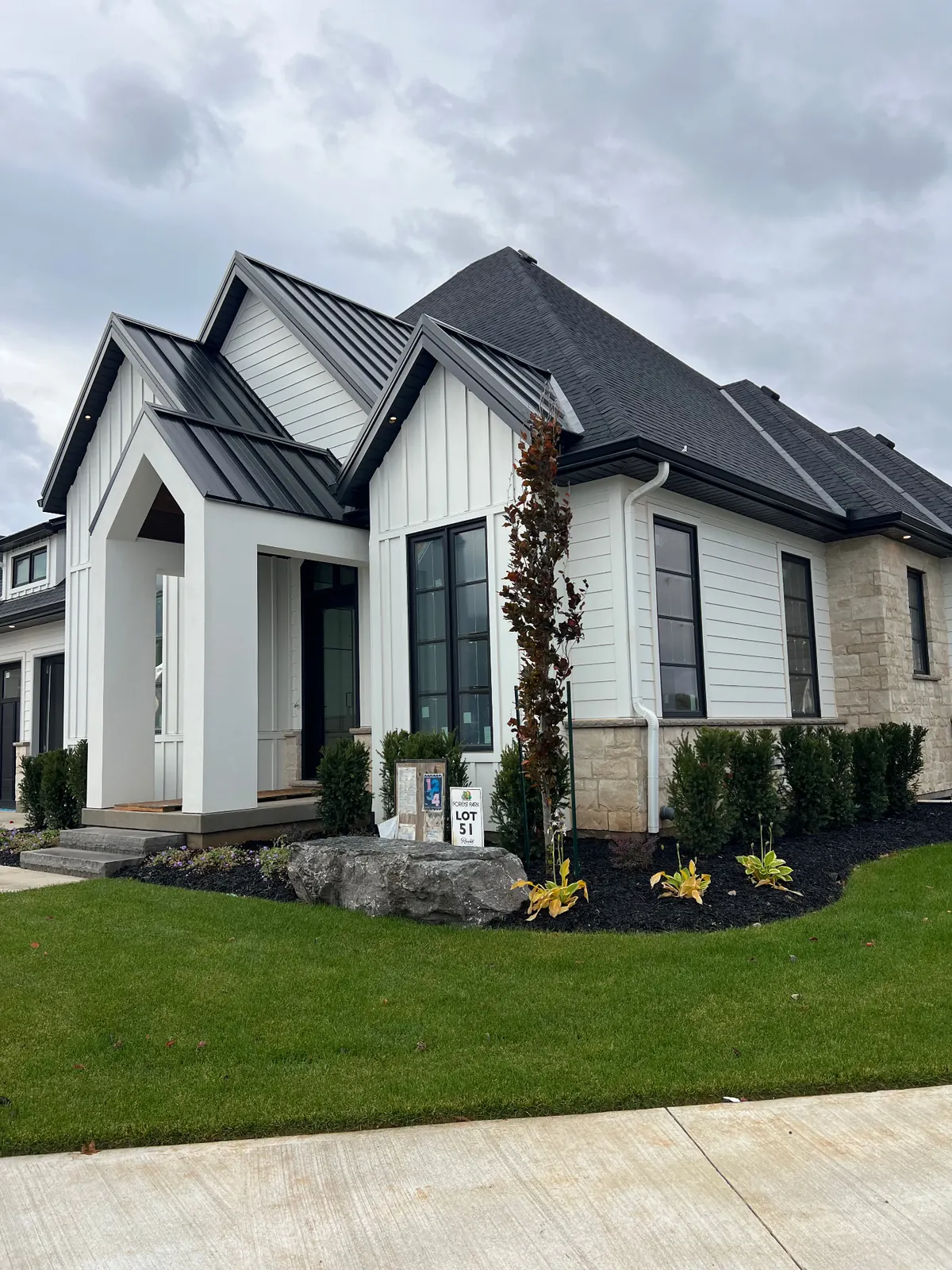
Large homes with complex rooflines concentrate water. Multi-gable roofs funnel several planes into short valley runs, so we recommend 6-inch seamless aluminum with additional downspouts on those elevations rather than trying to make one 5-inch outlet carry the whole valley.
Exposed high ground means real freeze-thaw cycling. Open wind exposure on the Kame moves temperatures across freezing more often than sheltered valley streets, and every cycle stresses joints and any standing water left by a poorly sloped run. Correct slope and seamless forming matter more here than material grade.
Steep gables shed snow that refreezes at the eave, so de-icing cable on north exposures and lower catch eaves is worth pricing where the same spot ices up every year. On long straight runs, hidden bracket hangers at tightened spacing hold alignment better than spike-and-ferrule under snow load.
The short recommendation for most Pelham homes: 6-inch seamless aluminum on large or complex rooflines, leaf guard on treed lots, extra downspouts wherever valleys converge, and hidden bracket hangers on long runs. Full material detail is on our eavestrough, soffit and fascia service page.